

We're With the Band
EDITOR'S NOTE / FICTIONAL HUMOR: The following Pipe Blog is a work of fiction and humor. Zach Moore was not a tour manager for Guns N’ Roses, and Contech Engineered Solutions has no affiliation with, sponsorship from, or endorsement by Guns N’ Roses, Slash, Axl Rose or any other individuals referenced in this story. The names and references are used solely as part of the fictional story.
Before I started my career at Contech, I used to joke that I was the tour manager for Guns N’ Roses. In this completely fictional version of events, however, I actually was!
Up until 2011, I was booking global tours for the band in places like Budapest, Warsaw, London… The night they were scheduled to play Cincinnati as part of their North American leg of the tour, I get this phone call from Axl Rose. He says to me: “The band’s done.” I said: “What are you talking about, Axl?” “I don’t know, man. Slash put down his guitar and says he wants to become a civil engineer or something.”
So, I call Slash: “Slash, my man, what’s going on?”
Slash laid it out to me: “My heart’s just not in it anymore. I want to work with metal bands.”
I said: “But Guns N’ Roses is practically a metal band already. I mean, maybe we could do some rebranding, and I could get you guys on tour with Metallica?”
“You don’t understand, Zach. I’m talking about corrugated metal bands. That’s where my true passion is.”
“What are you going on about, Slash?”
Turns out, when Guns N’ Roses were en route to Cincinnati, Slash demanded the bus make a pit stop at the IKEA in West Chester so he could get himself a cooling pillow to help him sleep. As he left the store, he was intrigued by this office building across the parking lot. It was situated in a fairly unassuming suburban office complex. The only real stand out feature was this illuminated sign that caught his attention: “CONTECH.” And if you know Slash, you know he’s a curious fellow, and he spent hours back on the bus looking them up.
Slash told me about how Contech was a major manufacturer and supplier of engineered infrastructure products and how they’re one of the major producers of corrugated metal pipe. Said there must be an estimated half a million miles of corrugated metal pipe installed in the U.S. under highways and roads to facilitate storm drainage. I mean, for a guy who doesn’t seem all that impressed by a whole lot, this stuff really fascinated him!
He told me about how corrugated metal pipe is manufactured in various factories across the U.S., how they’re transported by trucks to all these different jobsites, and how they’re ultimately installed in the ground by a small team of contractors. And the thing that really seemed to get Slash going was how corrugated metal pipe was connected together. Turns out, they’re connected by bands. Slash couldn’t emphasize this enough: “Zach, think about it: there’s this massive underground network, a vital component of our infrastructure that keeps everything moving smoothly, and they’re joined together by metal bands!”
And, in this fictional account, Slash proceeded to tell me far more than I ever wanted to know about corrugated metal bands…
Turns out, there are many types of coupling bands that are used to connect corrugated metal pipe together to prevent the misalignment of pipes and to prevent the joints from opening up. To list a few, he name-dropped the following…
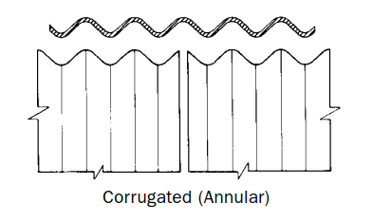
The standard fully corrugated band (annular): this band matches the corrugations of the pipe and provides a continuous interlocking connection between sections. (Slash was kind enough to share images with me so I could try to follow along with his newfound enthusiasm for corrugated metal bands.)
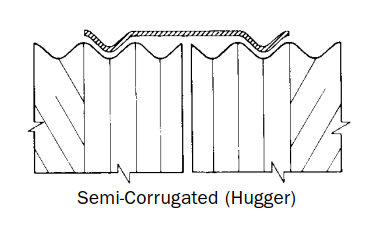
The semi-corrugated band (hugger): this band is partially corrugated at each end and provides a compromise between flexibility and contact between each section.
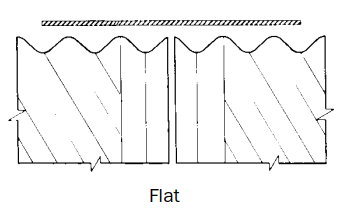
The flat band: a smooth band with no corrugations and acts as a simple connection between sections.
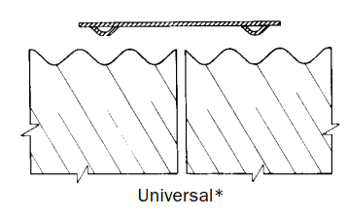
The universal band (dimple): as the name implies, it’s a band that is punctuated with dimples on the ends and can accommodate various corrugation patterns.
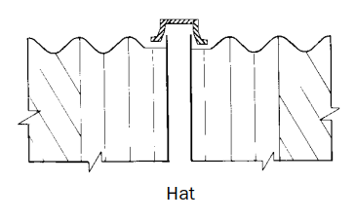
The hat band: This was, of course, the fictional Slash’s favorite coupling band that he came across but is probably the least utilized band in the corrugated metal pipe industry.
Then I got an earful from Slash about the various hardware and gaskets associated with each band. He said some designs call for water infiltration and require a more permeable connection, and that other designs attempt to prevent water infiltration and need a tighter connection. He said depending on how secure a connection needs to be, that will ultimately determine the gasket’s suitability. And, no surprise, there are a handful of options when it comes to selecting gaskets for corrugated metal bands…
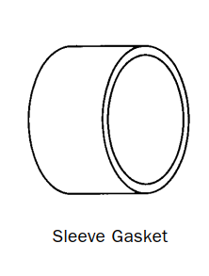
The sleeve gasket: it’s a flexible gasket that compresses between pipe ends to provide a soil-tight seal and accommodates for minor joint movement.
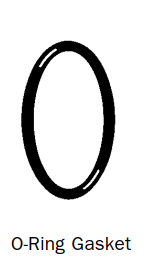
The O-Ring gasket: it’s a circular gasket seated in a corrugation valley that provides a soil-tight seal under compression.
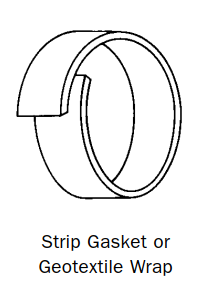
The strip gasket: it’s a continuous flat gasket wrapped around each section to provide a seal around the joints.
And, of course, Slash wanted to inform me of the various hardware to provide long-term compression for the bands…
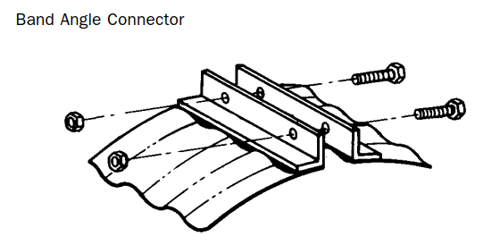
Band angles: these are small metal angles welded to the band and attached together with bolts and nuts.
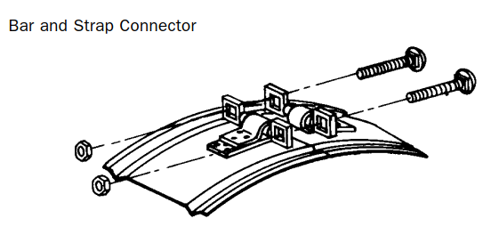
The bar, bolt, and strap: this connection consists of longitudinal bars and circumferential straps, tightened with bolted hardware to secure the joint.
Internal Flanges: these are pre-manufactured flanges at the end of each corrugated metal pipe and are secured with bolts and nuts (Slash didn’t have an image readily available that he could show me to accurately explain this concept to me).
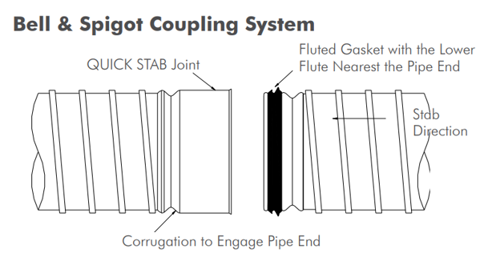
And for some inexplicable reason, Slash was really excited to talk about Contech’s “Quick Stab” joint (In our fictional conversation – like…weirdly obsessed). It’s a connecting method that includes a prefabricated bell on one end and spigot containing a fluted gasket. He said, “It just makes installation a breeze.”
To be clear, this fictional conversation above should not be interpreted as a statement, recommendation or endorsement by Slash or Guns N’ Roses.
I know what you’re thinking: “How much more could Slash possibly go on about coupling bands for corrugated metal pipes!” Apparently, he was contemplating settling down, living in the ‘burbs, and making a whole career out of it! Then he went on about “internal” bands that were used in reline applications. They essentially act as couplers that you install from inside the pipe.
I said: "Slash, this is cool and all but with all those options how on earth can anyone decide the right band to use?"
"Zach," Slash said, "that’s the most awesome part, you can just call Contech and they'll send someone to help you figure it all out. They’re cool like that.”
"Slash, this is too much.” I hung up on him and that’s when I walked away from being the tour manager for Guns N’ Roses. And as irony would have it…I went back to school, completed my engineering degree, and would you guess where I ended up working?
CONTECH.
Disclaimer: This Pipe Blog is a work of fiction and humor. Zach Moore was never the tour manager for Guns N’ Roses, and Contech Engineered Solutions has no affiliation with, sponsorship from, or endorsement by Guns N’ Roses, Slash, Axl Rose or any other individuals referenced in this article. Any conversations, statements, opinions or interactions attributed to those individuals are fictional and are intended solely for comedic purposes. References to Contech products and technologies are provided for informational purposes and should not be construed as endorsements by any person or entity referenced in this story.
And, for the record, Zach really did listen to Appetite for Destruction in its entirety.