
- Pipe
- Bridges & Structures
- Walls
- Stormwater Management
- Erosion Control
- Start a Project
- Knowledge Center
- Technical Documents
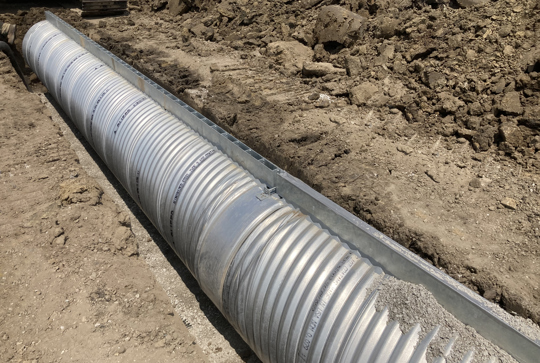
This Pipe Blog article explores how effective drainage systems play a critical role in reducing hydroplaning potential, highlighting the importance of proper surface design and sheet flow interception. The article focuses on the benefits of Slotted Drain systems for capturing rainwater runoff across wide, flat airport surfaces such as runways, taxiways, and maintenance areas. Backed by decades of proven performance and extensive hydraulic testing, Slotted Drain provides continuous surface drainage, high structural strength for heavy aircraft loading, and long-term durability with multiple coating options designed to withstand harsh airport environments, including areas exposed to de-icing chemicals.
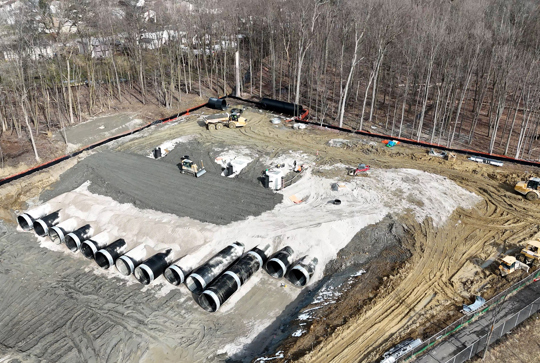
The audience engagement at our recent Contech webinar titled “Smart CSO/SSO Storage Solutions: Designing Resilient Systems for Today’s Infrastructure” was fantastic, proving that as municipalities deal with increased contaminated runoff, stricter regulations, and aging infrastructure, the hunt for reliable wastewater storage is heating up. Our presentation included several key design considerations for Contech’s DuroMaxx® SRPE tanks, which lead to various insightful questions. Many of the questions reflected similar themes, so I thought it might be beneficial to share a few – and the answers behind them to help designers better understand how the DuroMaxx® steel reinforced PE technology performs.

Infrastructure leadership carries a unique ethical burden. When a storm system fails, basements flood. When a culvert collapses, roads close – or worse. When wastewater containment systems fail, ecosystems suffer. These outcomes are not abstract. They affect real people.
In most industries, failure is inconvenient. In civil infrastructure, failure is consequential. Bridges carry families to work and school. Culverts protect rural highways from washouts. Storm systems prevent neighborhoods from flooding. Wastewater storage systems protect rivers and drinking water supplies. These are not optional assets – they are mission-critical systems that communities depend on every day.
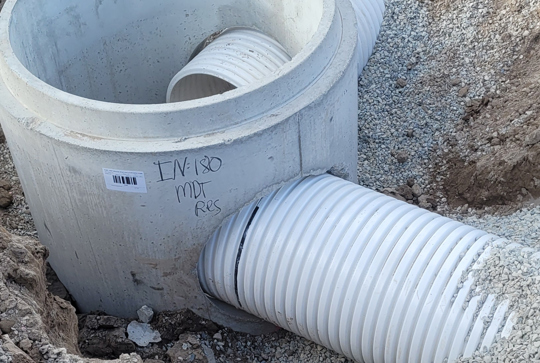
Most storm sewers are simply grouted into a manhole using non-shrink grout and a water-stop gasket, when appropriate. Contech has supplied both the “double fluted” and “single fluted” pipe gaskets for the “water-stop”, which is simply used to help the concrete/grout adhere to something other than the very smooth/slick PVC surface.

Civil engineers face a level of complexity and expectation that continues to rise year after year. Beyond mastery of core engineering principles, today’s professionals must navigate advanced digital design platforms, manage accelerated project timelines, interpret evolving regulatory frameworks, and coordinate seamlessly across multidisciplinary teams. At the same time, they are expected to deliver solutions that balance performance, constructability, sustainability, and cost—often amid tighter budgets and heightened public scrutiny.
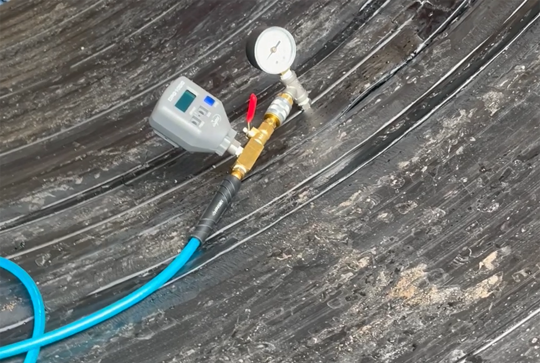
As America’s infrastructure expands, the demand for reliable sewer systems is growing rapidly—industry forecasts suggest over 700 million linear feet of sewer pipe installations by 2026. For larger-diameter systems (say 30 inches and up), ensuring the integrity of pipe joints becomes both more important and more challenging.
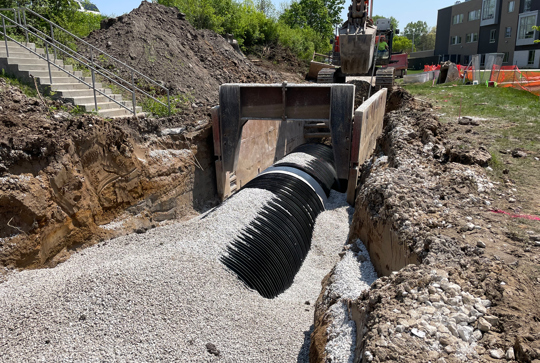
Trench boxes provide essential worker safety when installing pipe in deep trenches or unstable soils. However, their use with large diameter flexible pipes presents a critical challenge: maintaining compacted embedment integrity during trench box movement. Improper technique can create voids alongside the pipe or reduce backfill density adjacent to the pipe, eliminating the lateral support that flexible pipes require to control deflection.
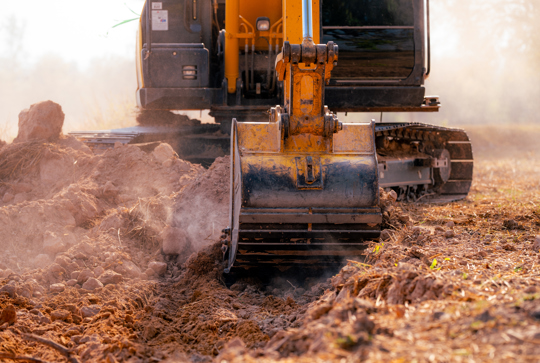
Buried pipelines are often “out of sight, out of mind,” but protecting them during construction is critical. Heavy equipment loads can exceed design limits, requiring additional temporary or permanent cover to prevent damage. Contractors must locate and mark buried pipes, then use cover-height tables—based on equipment type and load details—to determine proper protection. By applying the right cover and maintaining it throughout grading, paving, and other activities, contractors can safeguard installed pipelines and avoid costly failures.
SUBSCRIBE
The Pipe Blog is featured on the Contech eNewsletter. Get insights, news, tips & tricks delivered directly to your inbox. Sign Up Today to Receive.
