
- Pipe
- Bridges & Structures
- Walls
- Stormwater Management
- Erosion Control
- Start a Project
- Knowledge Center
- Technical Documents
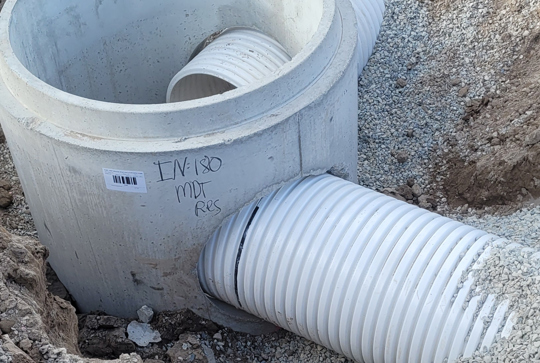
Most storm sewers are simply grouted into a manhole using non-shrink grout and a water-stop gasket, when appropriate. Contech has supplied both the “double fluted” and “single fluted” pipe gaskets for the “water-stop”, which is simply used to help the concrete/grout adhere to something other than the very smooth/slick PVC surface.
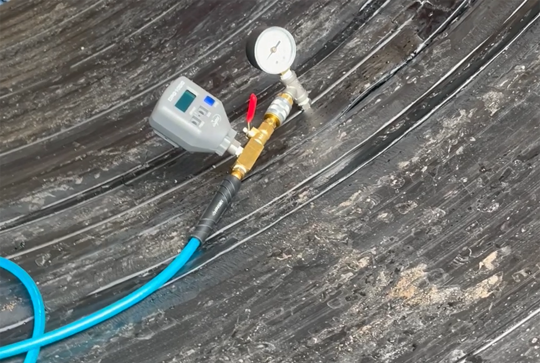
As America’s infrastructure expands, the demand for reliable sewer systems is growing rapidly—industry forecasts suggest over 700 million linear feet of sewer pipe installations by 2026. For larger-diameter systems (say 30 inches and up), ensuring the integrity of pipe joints becomes both more important and more challenging.
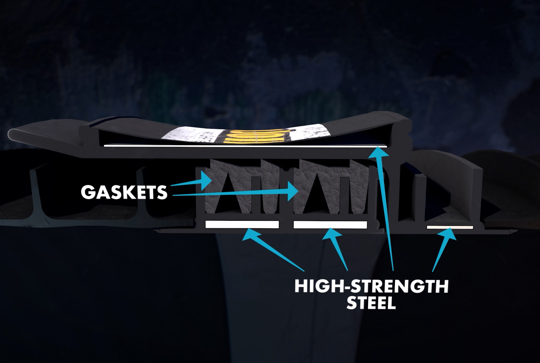
There are limited options for verifying a large to ultra-large diameter sewer pipe. You can do visual inspections, low-pressure air using isolation rigs & bladders or hydrostatic methods. These are either not effective or expensive and time consuming. A new method has been introduced to the industry via Contech Engineered Solutions’ (Contech) DuroMaxx® Steel Reinforced Polyethylene (SRPE) Pipe and the QuikJoint® Ultra High-Performance Technology.
The world of sanitary and storm sewers has seen a growing need for larger diameters to carry water. As pipe sizes increase, designing manway access becomes more challenging as larger pipes necessitate larger manholes or concrete boxes. It's not uncommon to resort to cast-in-place structures as the primary solution, which can be both time-consuming and expensive. However, with ongoing technological advancements and the increased use of thermoplastic pipe materials, alternative manhole solutions have been steadily gaining popularity. Many designers and regulators are recognizing the benefits of exploring alternatives to the traditional standard concrete manhole or box structures.
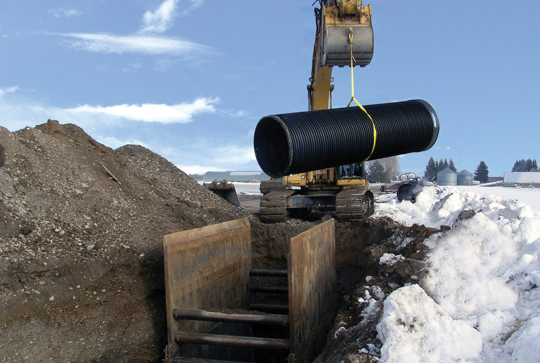
I know you all have been waiting with baited breath to find out the in's and out's of the last two considerations when evaluating a large diameter flow thermoplastic sewer solution. To recap, typically, the larger diameters tend to have far less directional changes and lateral connections. Also, interceptors tend to have deeper heights-of-cover in gravity flow applications. Many interceptors are designed to flow 50% to 70% full, with minimal slope, deep covers, and within groundwater (requiring dewatering installation). It is also not unusual for new interceptors/trunks to be miles of pipe using several diameters.
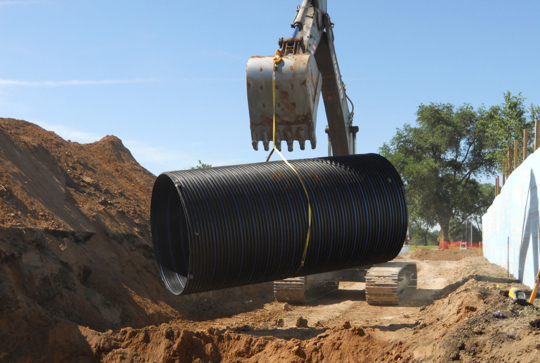
The need for large and ultra-large sanitary sewers is growing as community populations and conveyance flow requirements increase. Many expert studies have estimated that the sanitary sewer market will grow at a 6% compound annual growth rate (CAGR) in the coming years. With this growth, alternative materials, such as thermoplastics, are being designed more frequently due to the corrosive sanitary sewer environment.
SUBSCRIBE
The Pipe Blog is featured on the Contech eNewsletter. Get insights, news, tips & tricks delivered directly to your inbox. Sign Up Today to Receive.


